
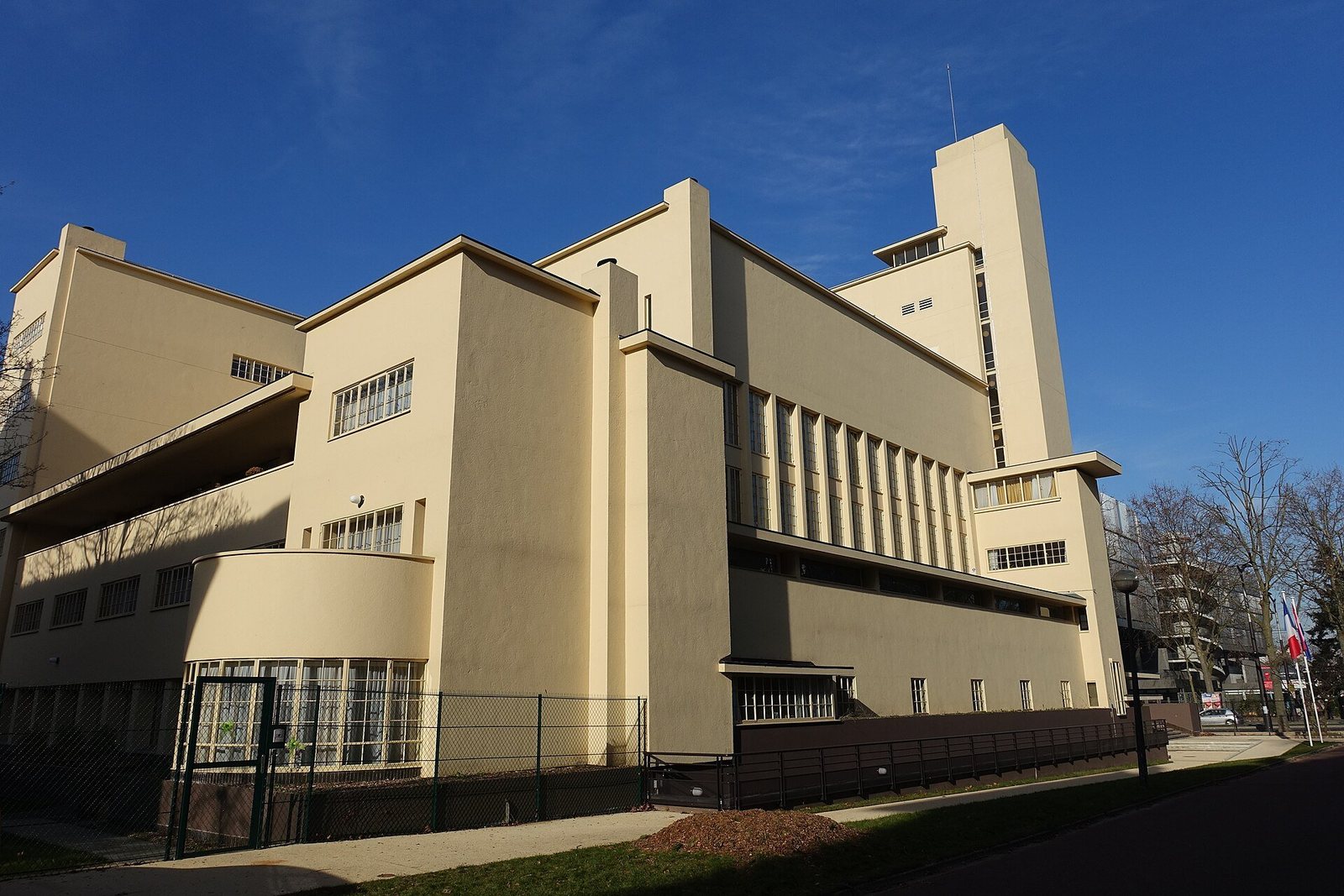
At the southern edge of the 14th, between boulevard Jourdan and the ring road, the Cité internationale universitaire de Paris sits in a 34-hectare park. Its website lists 47 houses and says it welcomes 12,000 students, researchers and artists from 150 nationalities each year. If you let a flat in the streets around it, this is a neighbour worth understanding, with strict admission rules: not everyone finds a place there.
The Cité in a few facts
The Cité is a private foundation, recognised as being of public utility by a decree of 6 June 1925. The Cité describes them as houses of countries or of schools. The Collège néerlandais, in our photo, was designed by the architect Willem Marinus Dudok and opened in 1938; it has been a listed historic monument since 2005. Parc Montsouris also lines boulevard Jourdan, and the site is served by the Cité universitaire RER B station and the T3a tram stop of the same name.
Who the Cité houses, and who has to look nearby
The Cité’s “Apply for accommodation” page sets out clear conditions:
- students must be enrolled on a master’s or doctoral programme, from four years of higher education upwards;
- researchers must hold a doctorate and have a postdoctoral project, or be lecturer-researchers, with a project accepted by an institution;
- artists apply for a defined project in the Île-de-France region;
- short-term guests linked to one of the houses are taken in only exceptionally, for one month at most.
Applications are made online only and go before an admissions committee. The Cité states that an application with no offer within 15 days of the requested arrival date is not accepted. An undergraduate or a researcher without a doctorate falls outside these conditions, and anyone waiting for the committee’s answer needs somewhere to stay in the meantime. The page says nothing either about a partner or children. A furnished flat in the neighbourhood can fill that gap.
Setting up a flat for a study or research stay
Someone who comes to work in a lab or write a thesis does not use a home like a weekend tourist. We set the flat up for that:
- a proper desk, a decent chair and a desk lamp;
- wifi tested at every team visit, with the code in the digital welcome book;
- room to store books, papers and an open suitcase;
- useful journeys explained step by step: RER B, the T3a tram, line 4 at Porte d’Orléans.
We write all of it in English and in French, since the Cité hosts people from a great many countries. On arrival day, guest check-in is timed to the actual train or flight.
A limit to bear in mind
When the flat is where you live, the City of Paris caps furnished tourist lets of it at 90 days a year. A research stay can use up that allowance quickly. We go through the rule in our guide to letting your own home in the 14th. Is your flat closer to the park and place Denfert? See our page on Denfert-Rochereau and Montsouris.
Frequently asked questions
Is a researcher without a doctorate eligible for a room at the Cité?
According to the Cité’s “Apply for accommodation” page, researchers must hold a doctorate and have a postdoctoral project, or be lecturer-researchers.
How long can a short-term guest stay at the Cité?
The Cité says a short-term guest’s stay cannot exceed one month, and that it is granted only exceptionally.
How do you get to the Cité from a flat in the 14th?
The site is served by the Cité universitaire station on RER B and the Cité universitaire stop on the T3a tram. Metro line 4 stops at Porte d’Orléans.
Photo: Guilhem Vellut, CC BY 2.0, via Wikimedia Commons